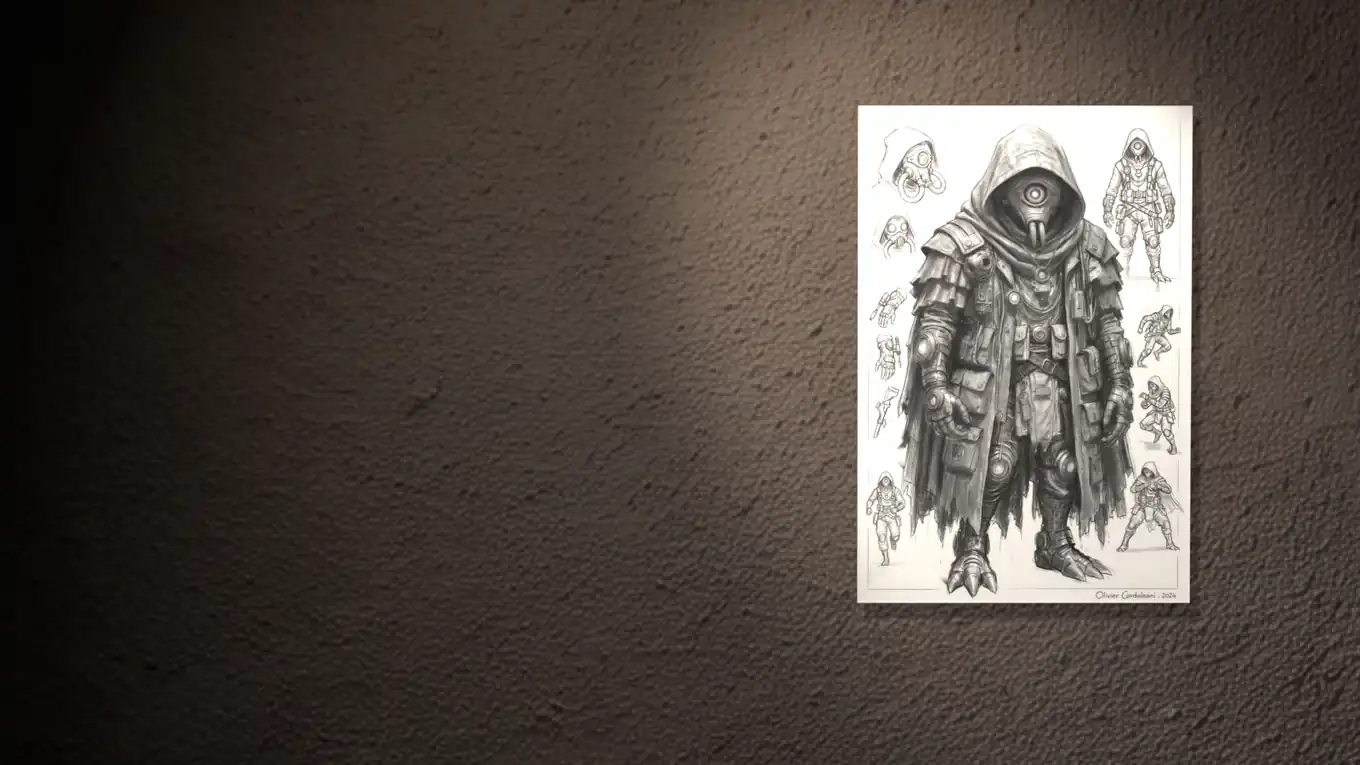
3D render on an AI-generated wall · collection project sample piece, shown without a card
Reveal the master.
Keep the relic.
The gallery is being built in plain sight. One work is on the wall; the rest of the workshop is shown as it progresses, and every step that goes online is noted in the log.
See the workshopThe waiting list
To hear about the gallery’s progress and its opening.
By the artist behind the images of B.A.T.
B.A.T. is a video game created in 1989 by Hervé Lange and Olivier Cordoleani. Olivier Cordoleani created its images. The works shown here are his, but they do not come from the game: Kraziss and the KRADOKID arise from his broader research into an overarching lore; they are not B.A.T. characters. These eight sample pieces give the spirit of a collection the gallery may one day present: a single work, repeated from a unique piece to an edition of thirty, these sizes being examples only. It is only a project, with no date and no edition size, and nothing is for sale.
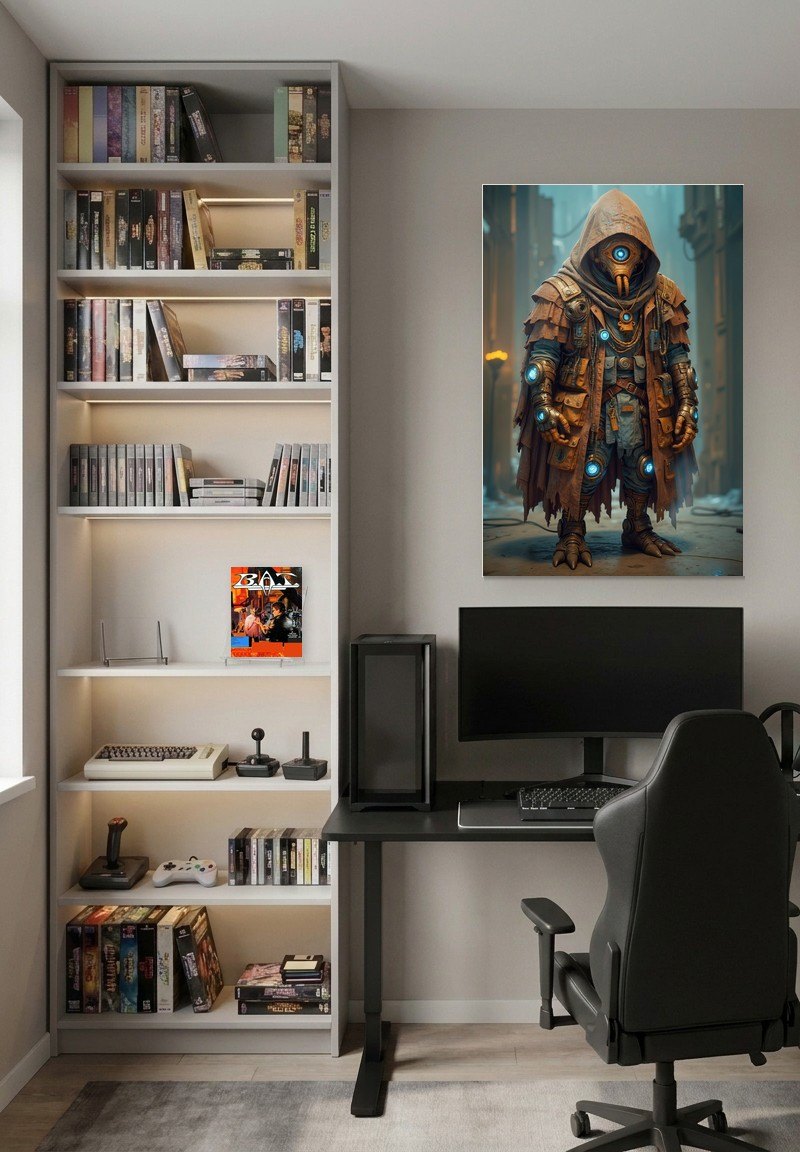

Demonstration images: the bedroom is AI-generated; the work and the B.A.T. box (a photograph) are inset into it; the final work is itself AI-generated. Sample pieces for a collection project.
Kraziss, of the KRADOKID — sample piece no. 1
Example: unique piece
The work hangs in a staged room, seen from a distance. Take the magnifier: the work fills the whole frame, as pixel art.
Simulation: no card is read here. Magnification without card: × 2.2; the mouse wheel or + and − adjust it.
| Without card | With the card, coming | |
|---|---|---|
| The work on the wall | In situ, seen from a distance | The same |
| The magnifier | The work as pixel art | The work in sharp detail, close up |
This sign marks what the RELICKEEPER card is designed to reveal. Everything else is visible without it. The RELICKEEPER card is not a payment card.
What is being built
No announced dates: each feature arrives when it is ready, and when one is shown before it is, it is labelled as such.
- In progress
Cimaise, the gallery’s decorator
Cimaise will prepare each work for the wall that awaits it: the size, the placement, the light.
- In progress
The RELICKEEPER card in the gallery
The RELICKEEPER card is designed to reveal, on screen, the master of the works the gallery presents, without handing over the file or any right in the work.
- In progress
The edition register
Each copy will have its own page in the register: its number, its edition, its entry in the register. The identity of its holder will never be published there.
- In progress
Size and hanging
Choosing the size of a work and seeing it to scale in a room, before any decision.
Preview · under constructionThe featured work, placed in a demonstration room prepared by the gallery. Room: AI-generated image.
Release log
- The gallery opens its workshop: one work on show, the work in progress and a waiting list.
- A menu shared by the RELICKEEPER sites, each marked with its pictogram.
- The gallerist, shown as a demonstration, and how a RELICKEEPER card is recognised.
- The gallery’s presentation film, and one visual identity for the RELICKEEPER sites.
- The gallery in French and English.
- The gallery’s website goes public, with sales closed, and introduces its author.
The waiting list
To hear about the gallery’s progress and its opening.
How a RELICKEEPER card is recognised
Held to a smartphone, the card is designed to be recognised in a single gesture.
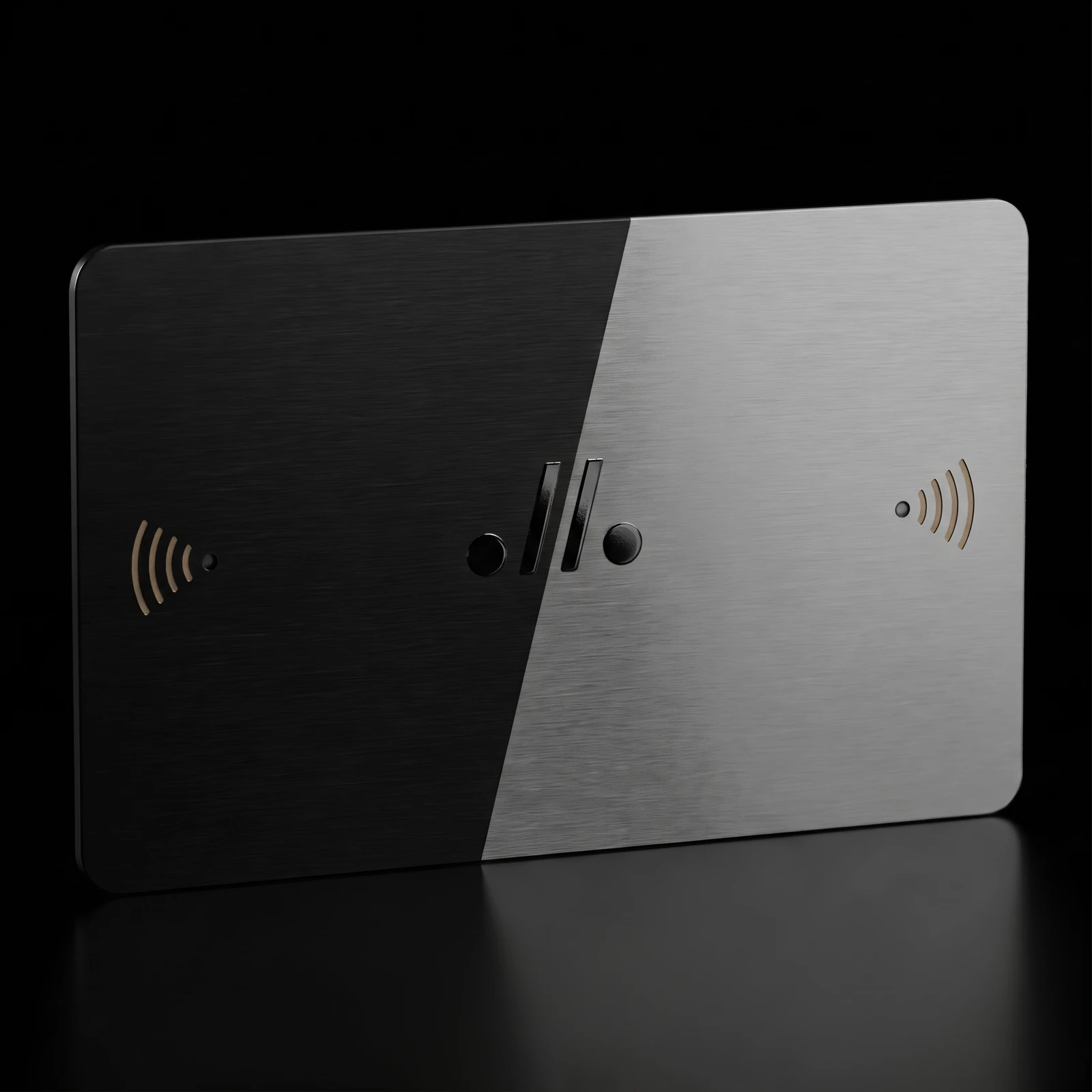
The French successor to the smart card.
Your bank card looks after your money. This one will look after your objects’ story.
Visit the shopOlivier Cordoleani
Engineer and art director
An engineer by training and an art director, Olivier Cordoleani has been building digital worlds for thirty-five years. In 1989 he co-wrote B.A.T. with Hervé Lange, a game published by Ubi Soft and winner of the 1990 Tilt d’Or for best graphics and the 1989 Gen d’Or for best interactive adventure game. His observation today: we rent our pictures, our music, our worlds; we no longer own them. RELICKEEPER is his answer, a card you hold in your hand to record an object’s provenance and organise its passing on, from hand to hand.
His journey